It is natural to feel proud when your child asks for extra vegetables or shows an interest in healthy cooking. As parents, we want to help our kids grow up strong, energized, and confident. With social media full of wellness trends, many young people naturally want to learn how food fuels their bodies.
However, there is an important line between balanced nutrition and rigid control. What begins as a positive goal—like “eating clean” or “getting fit”—can slowly turn into strict rules, anxiety, and guilt. When food choices create constant stress, the pursuit of health can harm a child’s emotional and physical well-being.
At the Growth and Healing Wellness Center in Fort Lauderdale, we often help families navigate these subtle shifts. Recognizing the difference between balanced habits and disordered eating is an essential first step in keeping your child safe, supported, and connected.
When Nourishment Becomes Control
Healthy eating is flexible. It leaves room for birthday cake at a party, pizza after a soccer game, and relaxed family dinners. True health means food supports your child’s energy, friendships, and growth—it does not take over their daily thoughts.
Disordered eating often hides behind the idea of “clean eating.” A child might suddenly cut out entire food groups like carbohydrates, dairy, or fats. While some dietary changes are normal, concerns arise when food choices are driven by fear, perfectionism, low self-esteem, or a desire for control during stressful times.
According to the National Institute of Mental Health (NIMH), eating challenges are rarely just about food. Instead, strict eating rules often serve as a way to cope with overwhelming emotions. When this happens, eating stops being nourishing and turns into an exhausting daily test of willpower.
Early Warning Signs Parents Should Notice
Disordered eating rarely appears overnight; it usually develops slowly over weeks or months. Seeing a single sign does not necessarily mean your child has an eating disorder, but a steady pattern of distress and rigid habits is a reason to pay close attention.
The National Eating Disorders Association (NEDA) highlights several warning signs parents should watch for:
- Strict food rules: Labeling foods as strictly “good” versus “bad” or “clean” versus “toxic,” and refusing to eat anything outside those narrow boundaries.
- Fear and guilt around meals: Showing visible panic or sadness after eating certain foods, or needing to know every single ingredient in a dish.
- A shrinking list of safe foods: Gradually eliminating favorite foods until only a tiny list of low-calorie or plain items feels acceptable.
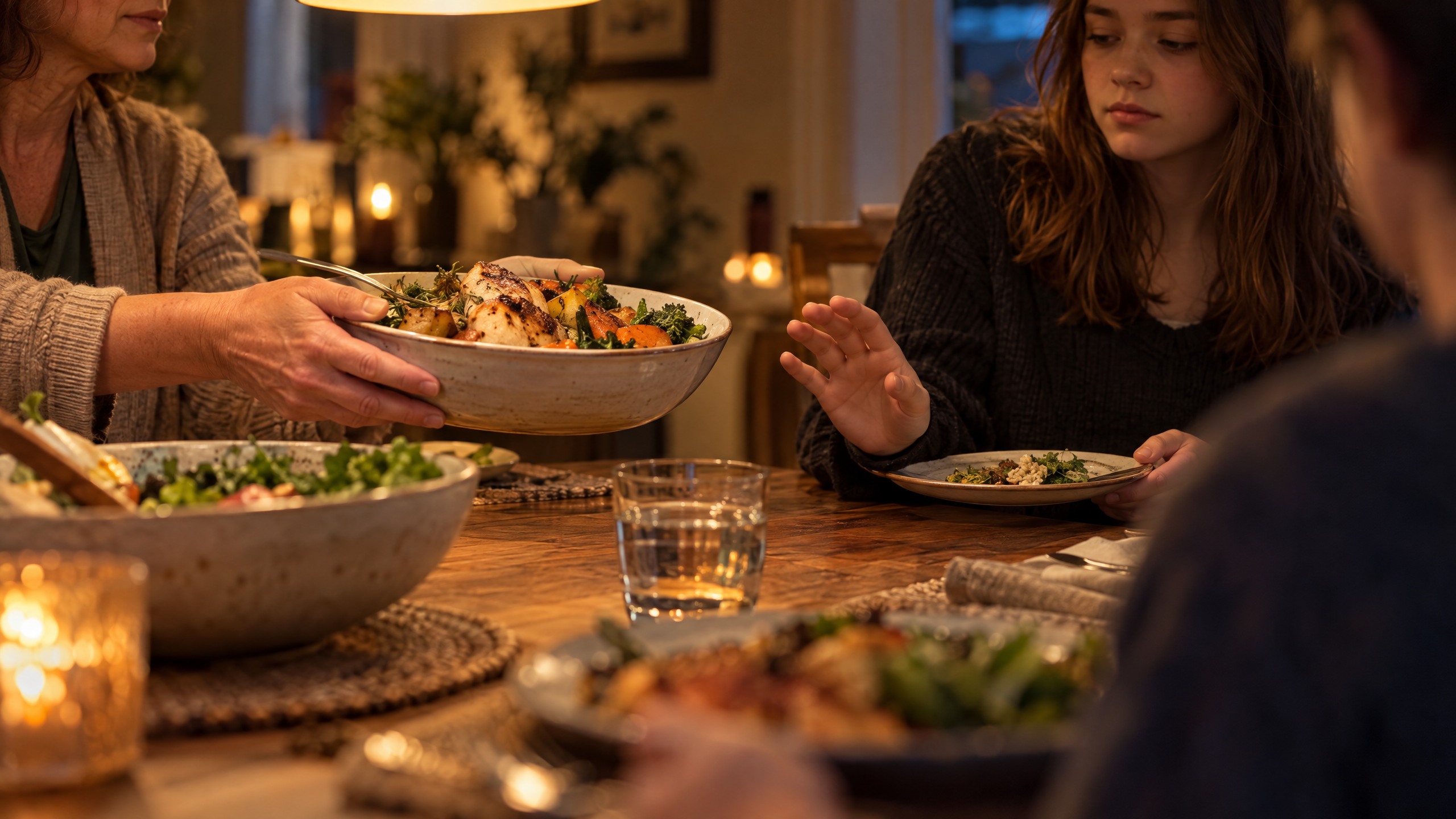
- Distress over changed plans: Becoming upset, anxious, or angry if dinner is late, if the family eats at a restaurant, or if unexpected plans disrupt routines.
- Obsessive tracking: Spending excessive time reading nutrition labels, measuring exact portions, tracking meals on apps, or repeatedly stepping on the scale.
- Compulsive exercise: Insisting on working out even when sick, tired, or injured, and using physical activity strictly to “earn” or “burn off” food.
- Social isolation: Making excuses to avoid family meals, eating alone in their room, or skipping social events where food is served.
- Physical and emotional shifts: Experiencing low energy, frequent chills, stomachaches, dizziness, mood swings, or a loss of interest in favorite hobbies.
How Parents Can Respond at Home
Noticing these warning signs can bring up worry and fear. The most effective approach is to lead with calm curiosity, compassion, and warmth rather than panic or pressure.
Here are five ways parents can offer support at home:
- Start calm conversations: Choose a quiet moment away from mealtimes to gently share your concerns. You might say: “I’ve noticed you seem stressed around food lately, and I care about you. How are you feeling overall?”
- Avoid appearance-focused comments: Remarks like “You look so thin” or “You look healthy” can inadvertently fuel food anxiety. Focus conversations on your child’s feelings, strengths, and character instead.
- End mealtime battles: Forcing food, policing bites, or bargaining at the table increases defensiveness. Keep meals low-pressure and centered on connection.
- Model balanced eating: Show your child that all foods fit into a healthy lifestyle without guilt, rigid rules, or negative self-talk.
- Keep regular routines: Continue serving consistent family meals and invite your child to join, providing a steady, secure environment.
When to Seek Professional Support
If your child’s food restrictions tighten, or if you notice shifts in their energy, mood, or physical health, reach out for professional guidance.
The American Academy of Pediatrics (AAP) stresses that early intervention leads to the best long-term recovery and emotional health. You do not have to wait for a crisis to ask for help.
A checkup with your pediatrician, paired with guidance from a licensed mental health professional, can help determine whether your child is dealing with anxiety, body image struggles, or early disordered eating. Compassionate, coordinated care provides young people with the tools they need to regain balance.
Finding Balance and Healing in Fort Lauderdale
Helping a child rebuild a peaceful relationship with food takes time, but your family does not have to navigate this journey alone.
Located in Fort Lauderdale, Florida, the Growth and Healing Wellness Center, founded and led by Margie Mader, LMFT, CHt, offers a compassionate, welcoming space for children, teens, and families. With extensive experience in family systems and emotional wellness, as well as disordered eating, Margie Mader and her team help families identify the deeper emotional needs behind rigid habits.
Through personalized therapy, your child can build healthy coping skills, strengthen self-esteem, and restore a balanced relationship with food. Contact the Growth and Healing Wellness Center in Fort Lauderdale today to explore how holistic support can help your family heal and thrive.
Educational Disclaimer
This article is provided for informational and educational purposes only and is not intended to diagnose, treat, or replace professional medical or mental health care. If you have concerns about your child’s health, please consult a qualified physician or licensed mental health provider.
References
- American Academy of Pediatrics (AAP). Golden, N. H., Schneider, M., & Wood, C. (2016). Preventing Obesity and Eating Disorders in Adolescents. Pediatrics, 138(3), e20161649. https://publications.aap.org
- National Eating Disorders Association (NEDA). Warning Signs and Symptoms. https://www.nationaleatingdisorders.org
- National Institute of Mental Health (NIMH). Eating Disorders: About More Than Food. https://www.nimh.nih.gov