
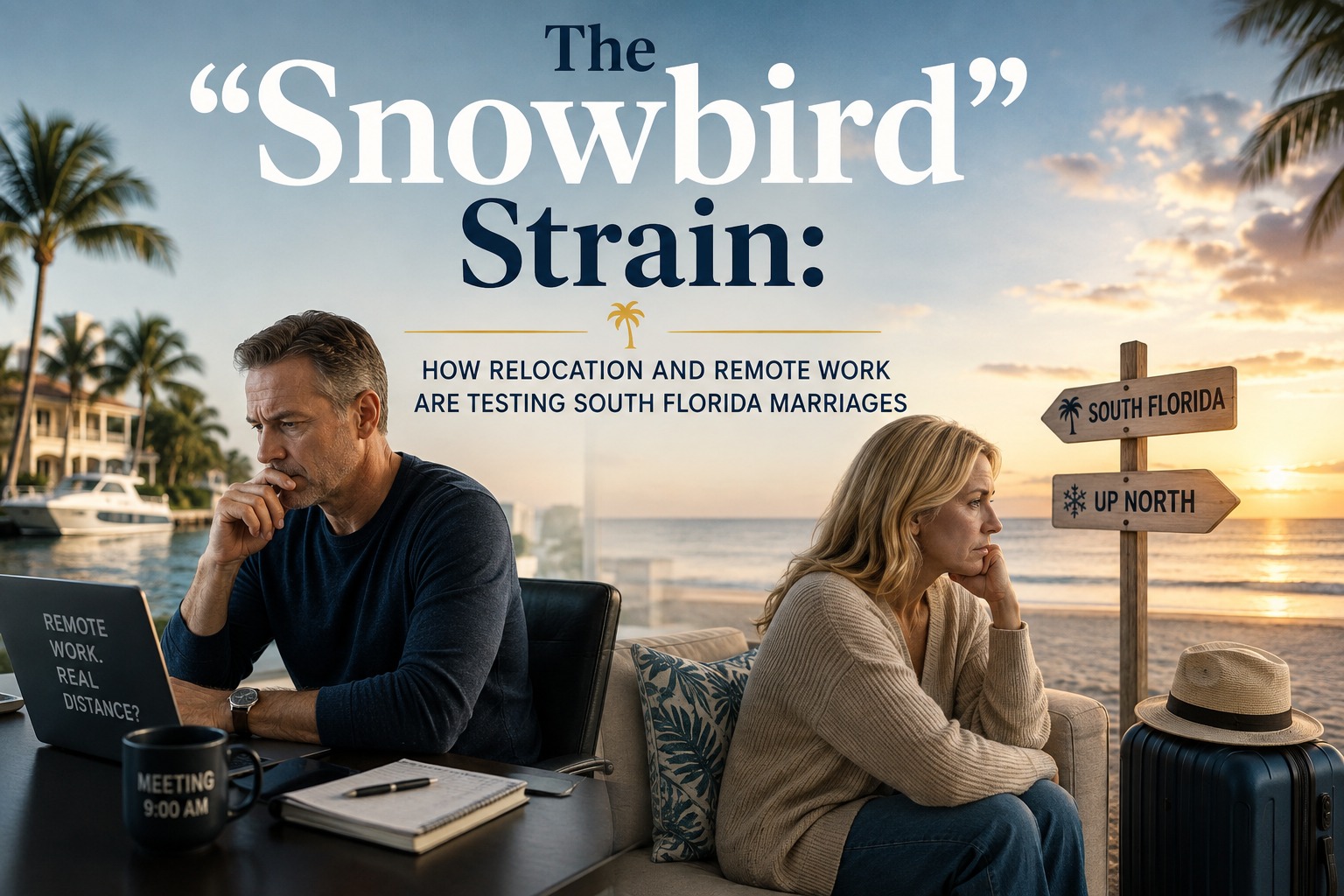
You did it. You finally made the move.
You packed up your life, said goodbye to cold winters or crowded cities, and headed to South Florida. Fort Lauderdale’s beaches, year-round sunshine, and that sweet remote work flexibility made it feel like the perfect decision. No more commutes. No more office politics. Just you, your partner, and paradise.
Except now you’re both working from the same small apartment. You haven’t made real friends yet. And somehow, you’re arguing more than you ever did before.
If this sounds familiar, you’re not alone. The “snowbird strain” is real, and it’s testing relationships across South Florida in ways nobody warned you about.
The Togetherness Paradox: When More Time Together Feels Like Too Much
Here’s the thing nobody tells you about remote work and relocation: spending all your time with your partner isn’t automatically romantic.
Before the move, you had separate lives that came together at the end of the day. Your partner went to their office. You went to yours. You had lunch with coworkers. They had after-work drinks with friends. You both had breathing room.
Now? You’re both on Zoom calls in the same room, eat every meal together, see each other first thing in the morning and last thing at night. There’s no natural break in the day. No time to miss each other. No space to be your own person.
It sounds like it should bring you closer. But constant proximity without relief doesn’t create connection. It creates friction.
Think about it like this: even your favorite song gets annoying if you play it on repeat for 12 hours straight. That doesn’t mean the song is bad. It means everyone needs variety and space.
The same goes for relationships. You need time apart to appreciate time together.
When Your Support System Disappears
Here’s where things get harder.
Back home, when you and your partner had a rough day, you had options. You could call your best friend. Visit your mom. Meet up with your college roommate for coffee. Your partner could go to the gym with their buddy or grab dinner with coworkers.
Those people weren’t just friends. They were pressure valves. They gave you perspective. They reminded you that your partner wasn’t the enemy—they were just human and having a bad day too.
Now you’re in Fort Lauderdale, and those people are a thousand miles away. FaceTime isn’t the same. Your partner has become your only social outlet, your only sounding board, your only everything.
That’s a lot of pressure to put on one person.
When you don’t have outside support, small conflicts become bigger. A minor disagreement about dishes turns into a two-hour argument because there’s nowhere else to channel your frustration. You can’t vent to a friend and let it go. You just stew in it.
Isolation doesn’t just remove your support system. It removes the buffer that kept your relationship healthy.
Where the Cracks Start to Form
So what does this actually look like day-to-day? Let’s get specific.
Work-life boundaries disappear. Your dining table is now your desk. Your bedroom is now your conference room. You never really leave work, and you never really get to relax. Your partner interrupts your meetings. You interrupt theirs. Nobody has privacy.
Household responsibilities get messy. Who’s supposed to do the dishes when you’re both home all day, makes lunch or cleans? These questions didn’t exist when you both left the house for work. Now they’re constant sources of tension.
Money stress creeps in. Moving is expensive. Maybe the cost of living in South Florida is higher than you expected or one of you took a pay cut to go remote. Financial worry makes everything else worse.
You lose your individual identity. You used to be more than just someone’s partner. You were a friend, a coworker, a team member, a regular at your favorite coffee shop. Now you’re just “we.” You’ve lost the parts of yourself that existed independently.
Communication breaks down. You assume your partner knows what you need because you’re together all the time. But being physically present isn’t the same as being emotionally connected. Important conversations get skipped because you think you’ll have time later. Resentment builds.
These aren’t signs that your relationship is broken. They’re signs that your relationship is adjusting to a massive change without the right tools.
Building a New Foundation
The good news? You can fix this. You can build something stronger than what you had before. But it takes intention.
Create boundaries. Set work hours and stick to them. Designate separate workspaces, even if it’s just opposite corners of the room. Use headphones. Respect each other’s meetings and focus time.
Schedule alone time. This isn’t optional. You both need time to be individuals. Go to the beach alone. Take a solo walk. Join a gym class without your partner. Give each other permission to have separate lives.
Build new community. Join local groups. Take a class. Volunteer. Go to networking events. Make friends who are yours, not “ours.” Fort Lauderdale has a huge transplant community—you’re surrounded by people going through the same thing.
Communicate intentionally. Don’t assume your partner knows what you’re thinking. Schedule regular check-ins. Talk about what’s working and what isn’t. Be honest about your needs before resentment builds.
Maintain your hobbies. Keep doing the things that make you you. If you loved painting, keep painting. If you loved playing basketball, find a local league. Don’t lose yourself in the relationship.
Plan couple time. It sounds weird to schedule time with the person you live with, but it works. Make date nights a priority. Explore your new city together. Create new memories that aren’t just about work and stress.
When Professional Help Makes Sense
Here’s the truth: asking for help isn’t a sign that your relationship is failing. It’s a sign that you’re smart enough to get support before things fall apart.
Moving to a new place and working remotely is a huge transition. It’s okay to need guidance as you figure it out. A professional can help you develop communication skills, set healthy boundaries, and rebuild connection in this new chapter.
If you’re in the Fort Lauderdale area, the Growth and Healing Wellness Center offers support for couples and individuals navigating exactly these challenges. Margie Mader, LMFT, CHt, understands the unique pressures that transplants and remote workers face. Sometimes having a neutral third party who gets it can make all the difference.
The Bottom Line
The snowbird life can be everything you hoped for. But it won’t happen automatically.
Your relationship needs space to breathe, support to lean on, and intention to thrive. The couples who make it aren’t the ones who never struggle. They’re the ones who recognize the struggle and do something about it.
You made a brave choice moving to South Florida. Now make the brave choice to build the relationship—and the life—you actually want.